

As we close another quarter, the investment landscape continues to evolve, presenting both challenges and opportunities. Let's dive into some key themes shaping the markets and your portfolios.
The Interest Rate Seesaw
The Federal Reserve has made a significant pivot, cutting rates by 0.50% in September—the first reduction since March 2020. This move signals a shift in monetary policy, with more cuts anticipated through 2024 and into 2025.
Historically, when the Fed begins cutting rates, the process can unfold quickly. Looking at past rate cut cycles, we've seen the federal funds rate drop by an average of over 3% within six months of the initial cut. This trend suggests we may be entering a period of rapidly declining rates.
What does this mean for your investments?
- Bond Opportunities: Intermediate-term bonds have historically performed well during periods of falling rates. As rates decline, bond prices typically rise, potentially benefiting your fixed-income holdings.
- Equity Considerations: Interestingly, both the broader market and value stocks have historically delivered strong positive returns whether rates are rising or falling. However, value stocks have tended to outperform the market more significantly during falling rate environments.
Market Concentration and the "Magnificent 7"
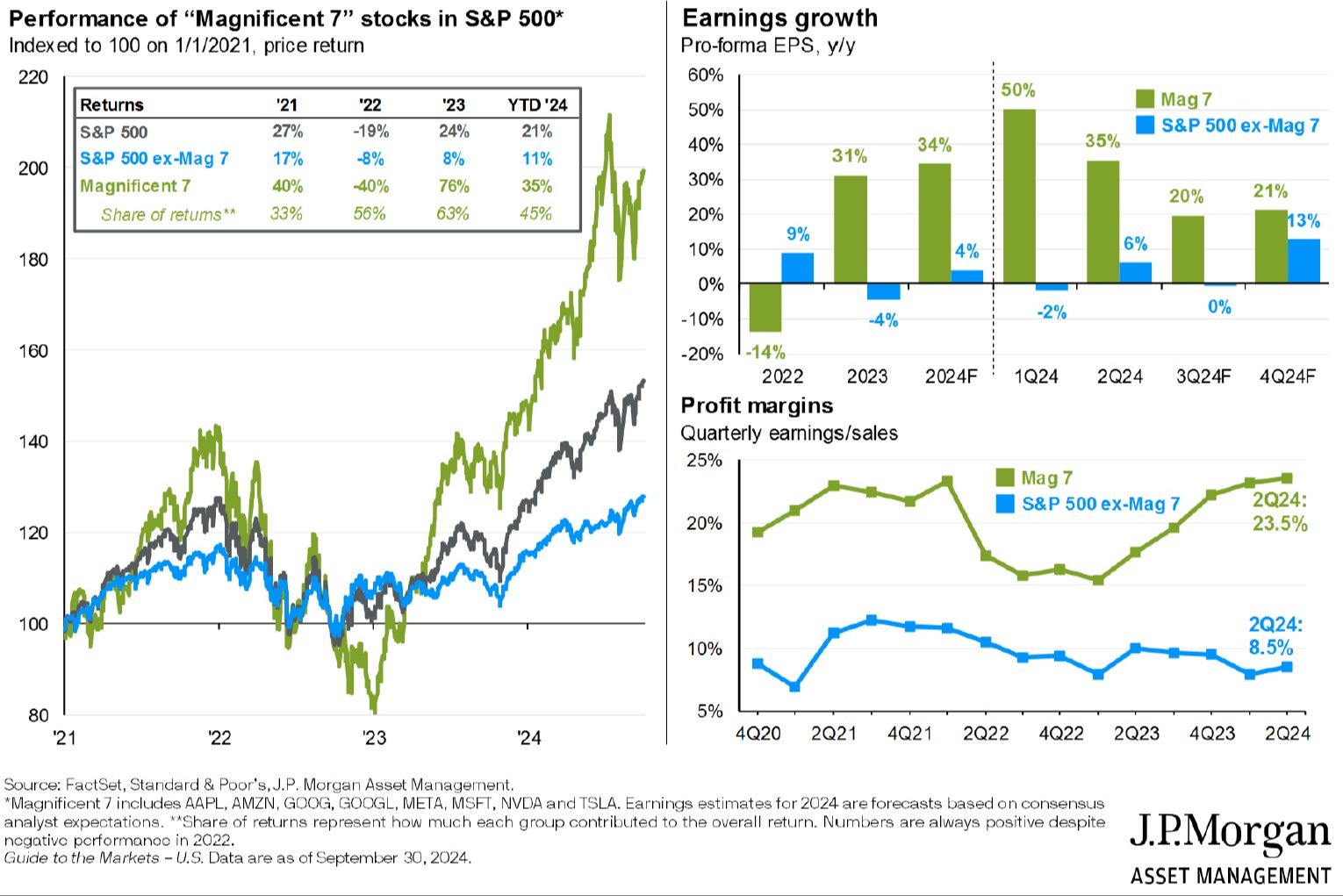
While we're on the topic of equities, it's worth noting a significant trend: market concentration. The so-called "Magnificent 7" stocks—Apple, Microsoft, Alphabet, Amazon, Nvidia, Meta, and Tesla—now account for over 28% of the S&P 500's market capitalization. This level of concentration is unprecedented in recent decades.
This concentration has led to outsized returns for these companies, but it's important to remember that with great power comes great volatility. Just as these stocks can drive markets up, they can also lead declines. This underscores the importance of maintaining a well-diversified portfolio.
Looking Ahead: The Election Factor
As we move closer to the 2024 U.S. presidential election, it's natural to wonder about its potential impact on the markets. While elections can create short-term volatility, it's crucial to maintain a long-term perspective. Historical data shows that markets have grown under various political configurations, reinforcing the importance of staying invested regardless of election outcomes.
In light of these dynamics, here are some key principles to keep in mind:
- Diversification is Key: Don't put all your eggs in one basket—or all your investments in a handful of tech giants. A well-diversified portfolio can help manage risk across various market conditions.
- Focus on the Horizon: Short-term market movements can be noisy. Keep your eyes on your long-term financial goals.
- Rebalance Regularly: As different assets perform differently, it's important to periodically realign your portfolio with your target allocation.
- Stay Informed, Not Reactive: While it's important to stay informed about market trends and economic indicators, avoid making impulsive decisions based on short-term news or political events.
Remember, in the world of investing, the most successful voyagers are often those who stay the course, adapt to changing conditions, and keep their eyes on the distant shore of their long-term financial goals—not just on the wake of the largest ships or the winds of political change.
Expect the Unexpected: The Reality of Market Returns
Imagine you're planning a road trip. While the average speed limit might be 55 mph, your actual journey will likely include stretches of slow traffic and open highways. Similarly, while the S&P 500 has averaged about 12% annually since 1926, yearly returns rarely hit this mark precisely.
In fact, only 15 out of 98 years saw returns within 5% of this average. The other 83 years? They deviated by over 18 percentage points on average. This variance isn't a flaw in the system—it's a feature. Just as traffic patterns are integral to a road trip, volatility is part and parcel of a healthy market.
As always, we're here to navigate these waters with you. If you have any questions about your portfolio or would like to discuss these trends in more detail, please don't hesitate to reach out. This is our first blog post, we welcome feedback! Please send us your questions that we can answer in future posts.